← Back to Blog
WATER QUALITY EDUCATION
Is Miami Tap Water Safe to Drink in 2025?
March 8, 2026 · 8 min read · By CrystalFlow Miami
Miami tap water is technically safe to drink. The Miami-Dade Water and Sewer Department (WASD) tests the water supply continuously and meets all federal standards set by the EPA's Safe Drinking Water Act. But meeting legal minimums and providing genuinely clean water are two different things — and for homeowners in Miami-Dade County, the gap between those two standards is worth understanding.
Independent testing and data from TapWaterData shows that Miami's water contains 12 contaminants above EPA health-based guidelines (MCLGs). These guidelines are not the same as the legal limits that utilities must comply with — they represent the levels at which health advocates and independent researchers consider water safe for long-term consumption, especially for children and vulnerable populations.
This post covers what is actually in Miami's tap water, why it matters, and what you can do to protect your household.
Where Does Miami's Tap Water Come From?
Miami gets the majority of its drinking water from the Biscayne Aquifer, a shallow limestone aquifer that lies beneath much of South Florida. The aquifer is the primary source for Miami-Dade WASD, which serves over 2.3 million residents across the county.
Water from the aquifer is treated at multiple water treatment plants before reaching your tap. Treatment typically involves:
- Lime softening to reduce hardness and organic material
- Chloramination — a combination of chlorine and ammonia used for disinfection
- Fluoridation to meet public health requirements
- Filtration to remove particulate matter
The treatment process is effective at neutralizing bacteria and pathogens. The concerns that remain involve chemical byproducts of that treatment process and naturally occurring minerals and contaminants that filtration does not fully remove.
What's Actually in Miami Tap Water?
Miami's water quality data reveals a few categories of concern.
Disinfection Byproducts: TTHMs and Chloramine
Miami uses chloramines (chlorine combined with ammonia) rather than chlorine alone for disinfection. This approach is preferred because it produces fewer immediate chemical byproducts. However, chloramines still react with naturally occurring organic matter in the water to form total trihalomethanes (TTHMs) — a class of chemicals that the EPA and World Health Organization classify as probable human carcinogens at elevated exposure levels.
TTHMs are absorbed not just through drinking but through skin contact during bathing. Research published in environmental health journals has shown that shower exposure can account for as much absorbed exposure as drinking the same water.
Miami's TTHM levels have been detected at concentrations above health-based guidelines set by independent organizations such as the Environmental Working Group (EWG), even when remaining within the EPA's legal limits.
PFAS — Perfluorinated Chemicals
PFAS (per- and polyfluoroalkyl substances), sometimes called “forever chemicals,” have been detected in Miami's water supply. These synthetic compounds are used in everything from non-stick cookware to firefighting foam, and they do not break down in the environment or in the body over time.
The EPA updated its enforceable limits for PFAS in drinking water in 2024, setting maximum contaminant levels at extremely low thresholds — 4 parts per trillion for PFOA and PFOS. Miami's water system is working toward compliance, but long-term exposure to PFAS has been associated with thyroid disruption, immune system suppression, and increased cancer risk.
Hard Water Minerals: Calcium and Magnesium
Miami's water is notably hard. Water hardness is measured in grains per gallon (GPG), and South Florida's water consistently registers in the hard to very hard range due to the region's limestone geology. As the Biscayne Aquifer water percolates through limestone deposits, it absorbs calcium and magnesium carbonate.
Hard water is not a health concern, but it is a property and comfort concern. It causes:
- White limescale buildup on faucets, showerheads, and tile
- Reduced lifespan for water heaters, dishwashers, and washing machines
- Soap scum that resists rinsing
- Dry skin and brittle hair after showering
Tannins and Yellow Color
If you have noticed a faint yellow or tea-like color in your Miami tap water at times, tannins are likely the cause. Tannins are naturally occurring organic compounds that leach into the water supply from decomposing plant material in and around the Biscayne Aquifer. They are not a known health hazard, but they contribute to the taste and appearance issues many Miami residents experience.
Other Contaminants Detected
Additional contaminants detected in Miami water at levels that vary by utility zone and testing period include:
- Chromium-6 (hexavalent chromium): a known carcinogen found above health advocacy guidelines
- Nitrates: from agricultural runoff, a concern primarily for infants
- Arsenic: detected at low levels; associated with long-term cancer risk at elevated exposure
- Radium and uranium: naturally occurring radioactive elements from the aquifer
“Legal” vs. “Safe” — Understanding the Difference
This distinction is central to making informed decisions about your water.
The EPA sets Maximum Contaminant Levels (MCLs) — the legally enforceable limits for utilities. These limits were largely established decades ago and are based on a combination of health data and what is technologically feasible for large-scale water treatment. They are not always current with the latest health science.
The EPA also publishes Maximum Contaminant Level Goals (MCLGs) — non-enforceable goals based purely on health, without regard to cost or feasibility. For some contaminants like chromium-6 and arsenic, the MCLG is effectively zero, meaning no level is considered safe.
Miami's water meets all MCLs. But independent testing shows that 12 contaminants are present above their MCLGs. This is not a violation. It is a gap between what is legally acceptable and what health advocates consider genuinely safe — particularly for long-term daily consumption by children.
What Miami Residents Should Do
Understanding the data leads to a practical question: what should you do?
For most healthy adults, Miami tap water poses minimal acute risk. Drinking it short-term is not a cause for alarm.
For families with children, pregnant women, or immunocompromised individuals, reducing exposure to PFAS, TTHMs, and chromium-6 is a reasonable precaution supported by current health research.
For homeowners concerned about appliances, fixtures, and pipes, hard water is a tangible, measurable problem that has direct financial consequences — replacing appliances prematurely, paying for plumbing repairs, and spending more on cleaning products and soaps.
Your Options
- Do nothing — Acceptable if you are a healthy adult renting short-term and your primary concern is acute illness, not long-term chemical exposure.
- Use a pitcher filter or refrigerator filter — These carbon-based filters reduce chloramine taste and some contaminants. They cover only a small portion of your household's daily water contact (drinking only).
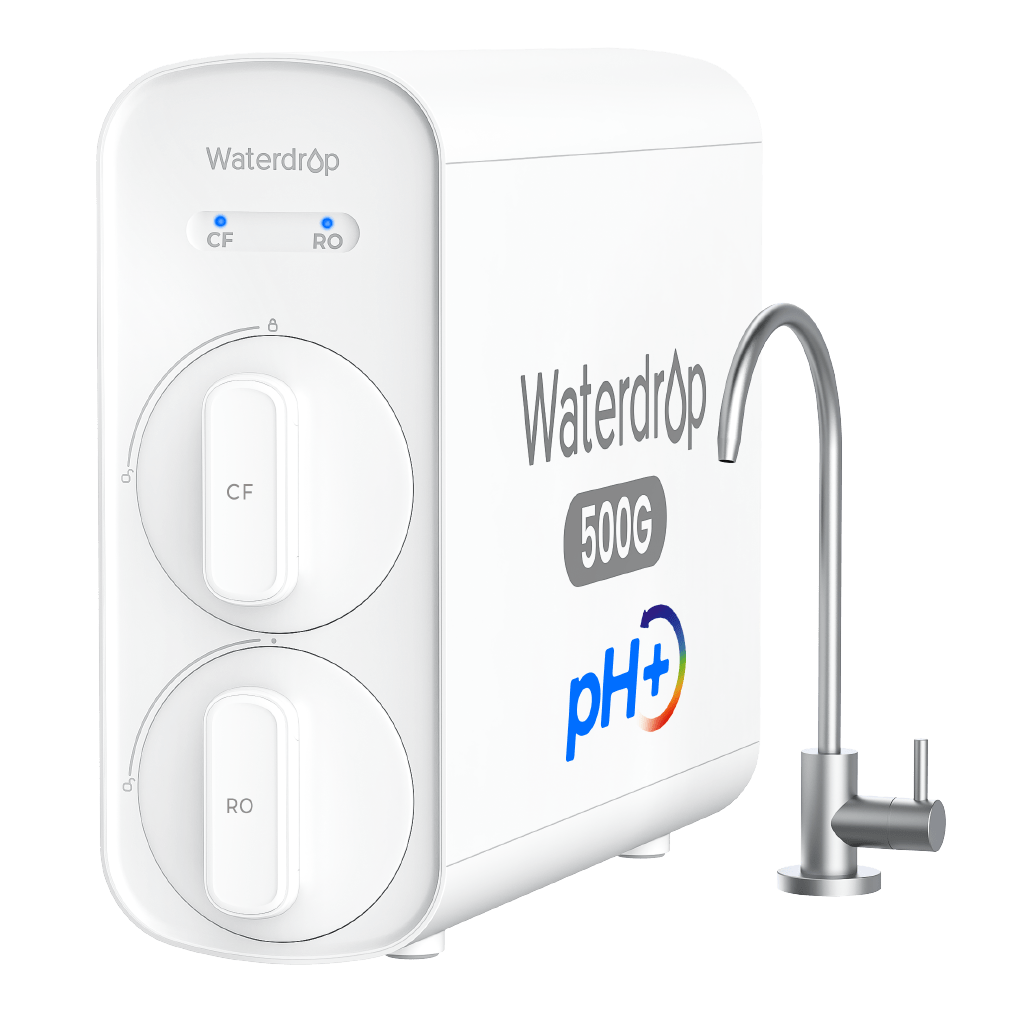
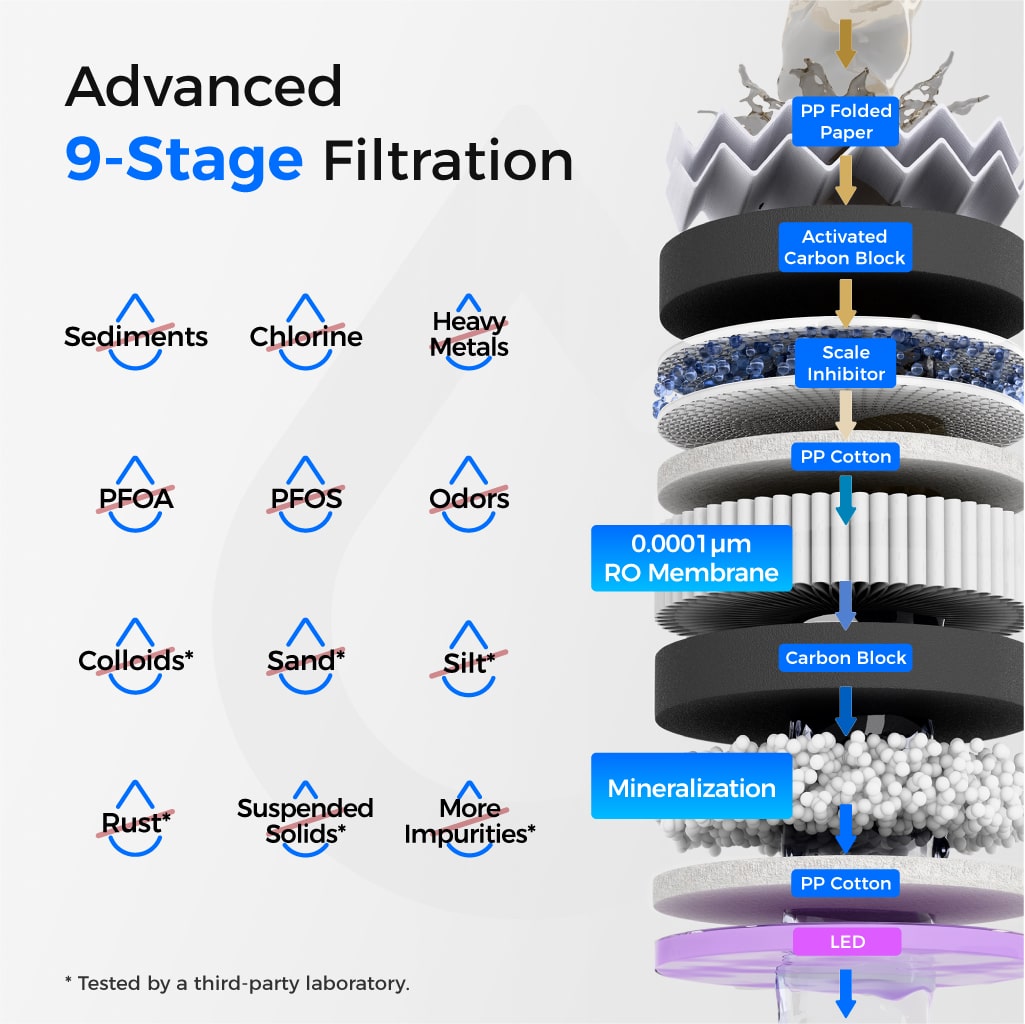
- Install a kitchen point-of-use filtration system — A better solution for renters and households focused on drinking and cooking water quality. CrystalFlow's Kitchen Guard ($599–$719 installed) uses the Waterdrop G5P500A (8-stage alkaline RO, 500GPD) and/or T-3M (9-stage, 450GPD) to remove chloramine, TTHMs, heavy metals, and improve taste and odor from the kitchen tap.
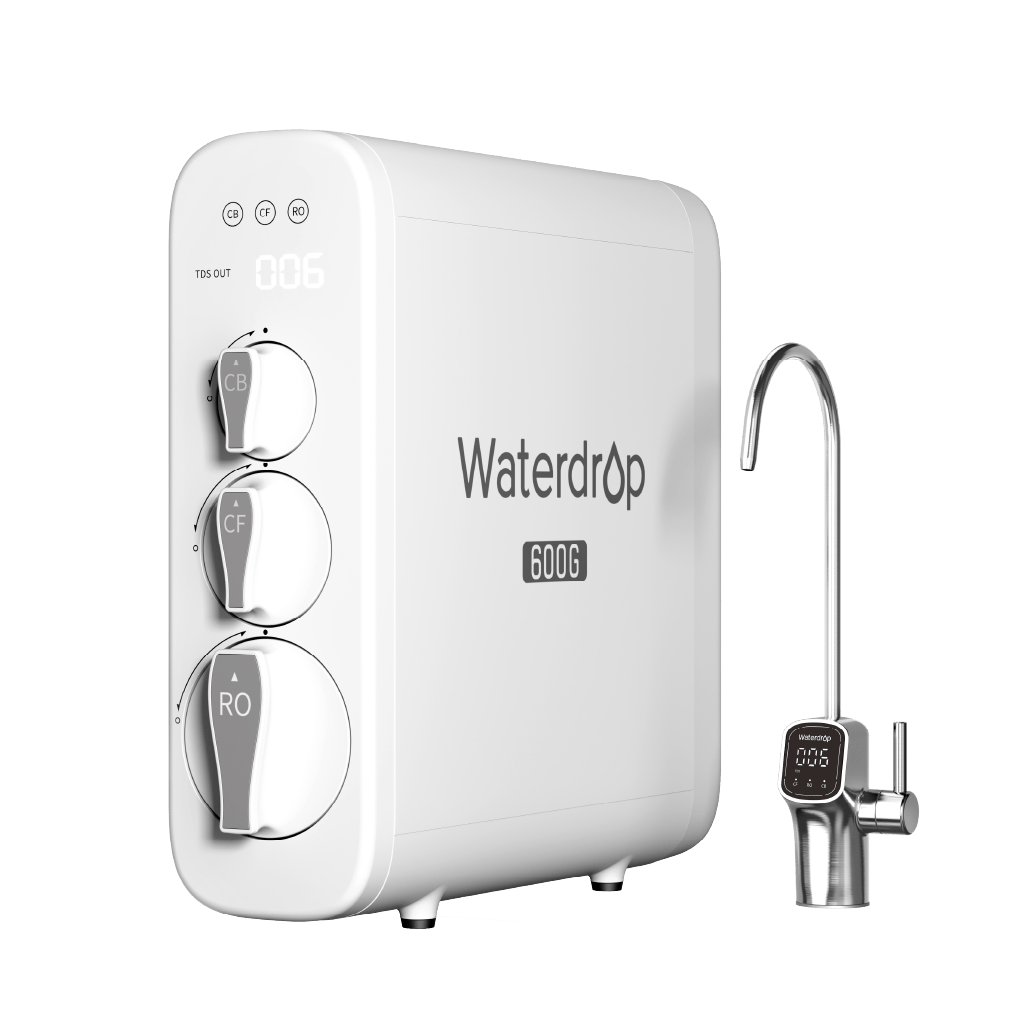
- Install a whole-home water softener system — The Home Shield system ($1,559–$1,859 installed) features the Waterdrop G3P800 (10-stage UV, 800GPD) and/or G3P600 (8-stage, 600GPD), designed specifically for Miami's hard water. It softens water throughout the home, extends appliance life, and reduces scale buildup.
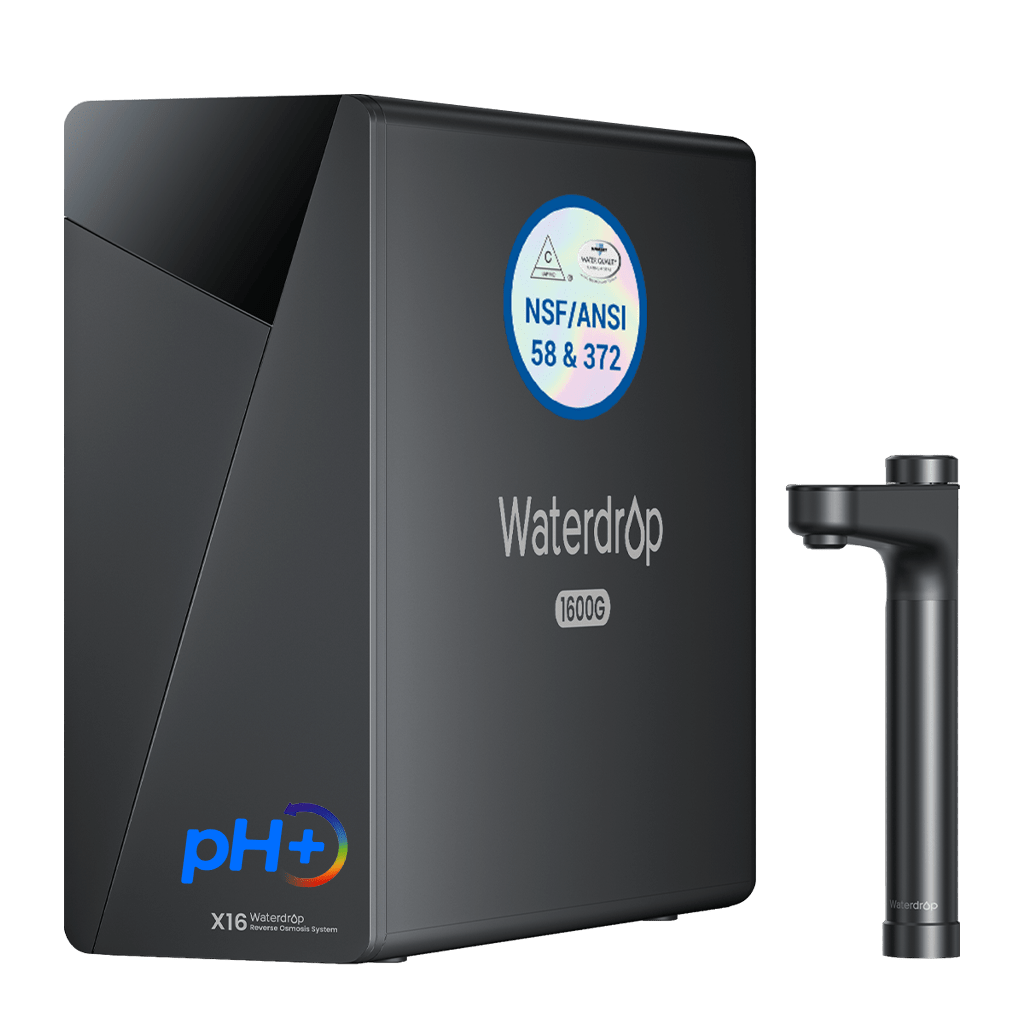
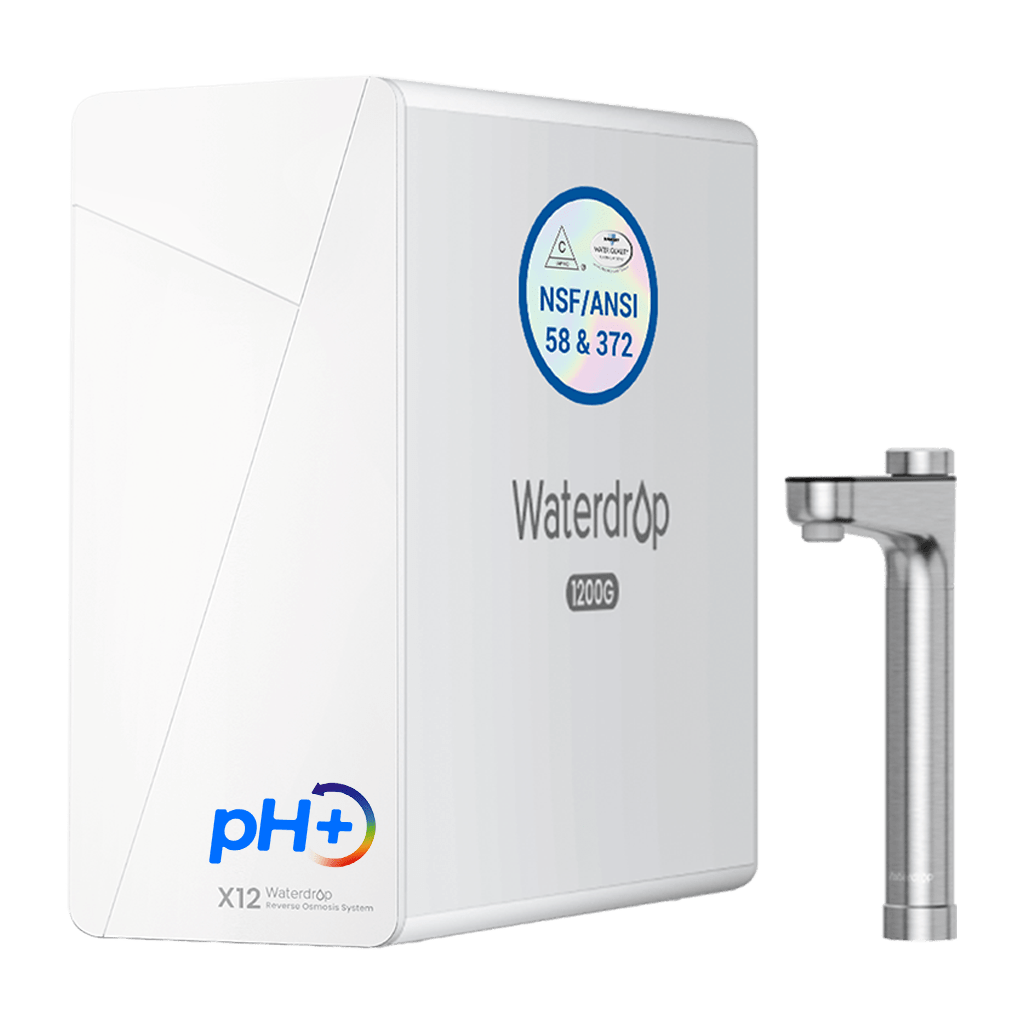
- Install a whole-home reverse osmosis system — The most comprehensive option. CrystalFlow's Pure Life system ($2,279–$2,639 installed) uses the Waterdrop X16 (11-stage alkaline+UV, 1600GPD) and/or X12 (10-11 stage, 1200GPD), removing over 1,000 contaminants including PFAS, chloramine, TTHMs, arsenic, chromium-6, and hardness minerals. This is the system most recommended for families with children.
What a Free Water Test Reveals
The most effective first step is knowing what is specifically in your water — not what is generally in Miami's water. Water quality varies by neighborhood, by plumbing age, and by your specific utility zone within Miami-Dade.
CrystalFlow Miami offers free in-home water testing that screens for:
- Total dissolved solids (TDS)
- Water hardness (grains per gallon)
- Chloramine and disinfection byproduct indicators
- pH levels
- Iron and heavy metal screening
The test takes less than 30 minutes, results are provided on-site, and there is no obligation to purchase anything.
The Bottom Line
Miami tap water is legally compliant. It is treated, tested, and safe from the perspective of acute health risk. But it contains 12 contaminants above independent health-based guidelines, is notably hard, and carries disinfection chemicals that affect taste, smell, and long-term exposure risk.
For Miami homeowners and renters who want to move from “technically acceptable” to genuinely clean water, a home filtration system is the most effective solution available — and professional installation from a licensed plumber ensures it is done right.
Ready to know exactly what's in your water?
Book a Free Water Test with CrystalFlow Miami. Our licensed team will test your home's water on-site, provide a full written report, and walk you through the options that match your home, your budget, and your family's needs.
Book a Free Water Test
Call (786) 947-3824 — No obligation. Results on-site.
← Back to Blog
HARD WATER SOLUTIONS
Miami Hard Water: What It's Doing to Your Home (And How to Stop It)
March 8, 2026 · 7 min read · By CrystalFlow Miami
If you live in Miami-Dade County, hard water is not a maybe — it is a given. The same limestone geology that gives South Florida its iconic landscape is responsible for loading the Biscayne Aquifer with calcium and magnesium minerals. When that water moves through your pipes and out of your faucets, those minerals come with it.
The effects are visible, measurable, and costly if left unaddressed. This post explains exactly what hard water is, how to identify it in your home, what it is costing you, and what Miami homeowners can do to stop it.
What Is Hard Water and Why Does Miami Have So Much of It?
Water hardness is determined by the concentration of dissolved calcium and magnesium in the water supply. It is measured in grains per gallon (GPG), with readings above 7 GPG classified as “hard” and above 10 GPG as “very hard.”
Miami's water comes primarily from the Biscayne Aquifer, a shallow limestone formation that underlies much of Southeast Florida. As rainwater percolates through the limestone, it dissolves calcium carbonate and magnesium — picking up the minerals that cause hardness before the water reaches the treatment plant.
Miami-Dade's water typically measures in the hard to very hard range even after treatment. Some municipalities in the county perform lime softening to reduce hardness, but the process does not eliminate it entirely. Residents in Miami, Coral Gables, Hialeah, Doral, and surrounding areas consistently deal with hard water effects in their homes.
The minerals themselves are not a health hazard. The problem is what they do to everything your water touches.
Signs You Have Hard Water in Your Miami Home
Hard water leaves physical evidence throughout your home. If you are seeing several of these signs, your water hardness level is likely significant enough to cause ongoing damage:
- White or yellowish scale on faucets and showerheads. This chalky buildup is calcium carbonate — the same mineral in limestone. It accumulates wherever water evaporates and leaves minerals behind. In South Florida's climate, this happens quickly.
- Cloudy or spotted glassware and dishes. Even after a full dishwasher cycle, dishes and glasses emerge with white streaks or a cloudy film. This is mineral residue that dishwasher detergent cannot fully remove in hard water conditions.
- Reduced water pressure. Over time, scale accumulates inside pipes, narrowing the effective diameter of your plumbing. Many Miami homeowners attribute low water pressure to the building or city infrastructure without realizing the cause is mineral buildup inside their own pipes.
- Dry skin and brittle hair after showering. Hard water leaves a thin mineral film on skin that strips away natural moisture. Hair washed in hard water tends to feel rough, dull, and prone to breakage.
- Soap that does not lather. Calcium and magnesium ions interfere with the surfactants in soap and shampoo, reducing lather and cleaning effectiveness. Residents using hard water typically need more soap, shampoo, and detergent to achieve the same result.
- Orange or rust staining. If your water also carries elevated iron content — common in older Miami plumbing — you may see rust-colored stains in the toilet bowl, sink basin, or tub.
What Hard Water Is Costing Miami Homeowners
The inconveniences above are the visible signs. The financial damage is the less obvious but more serious consequence of untreated hard water.
Water Heater Efficiency and Lifespan
Scale buildup inside a water heater tank forces the heating element to work harder to heat water through a growing layer of mineral insulation. Studies on water heater performance show that hard water can reduce heating efficiency by up to 15% — which shows up directly on your energy bill over time.
More significantly, scale accumulation dramatically shortens a water heater's lifespan. A gas or electric water heater that should last 10–12 years in a soft water environment may fail in 6–8 years in a hard water home in Miami. At a replacement cost of $900–$1,800 installed in South Florida, that is a real financial consequence of untreated hard water.
Dishwasher and Washing Machine Damage
The scale that forms on dishes also forms on the internal components of dishwashers and washing machines. Heating elements, pumps, and spray arms accumulate mineral deposits over time, reducing efficiency and eventually causing mechanical failure.
Plumbing and Pipe Degradation
Older copper and galvanized steel pipes in Miami homes are particularly vulnerable to scale buildup. As the interior diameter narrows from mineral accumulation, water pressure drops and the risk of pipe corrosion increases. In severe cases, the scale itself can trap bacteria and debris, creating additional water quality issues.
Ongoing Product Costs
Hard water homeowners spend more on:
- Laundry detergent (requires more to achieve the same clean)
- Dish soap and dishwasher pods
- Cleaning products to remove scale and soap scum
- Shampoo and conditioner to compensate for mineral stripping
While each individual cost is modest, the cumulative annual expense for a Miami household is often several hundred dollars per year — money that could offset the cost of a water treatment system.
How a Water Softener Solves Miami's Hard Water Problem
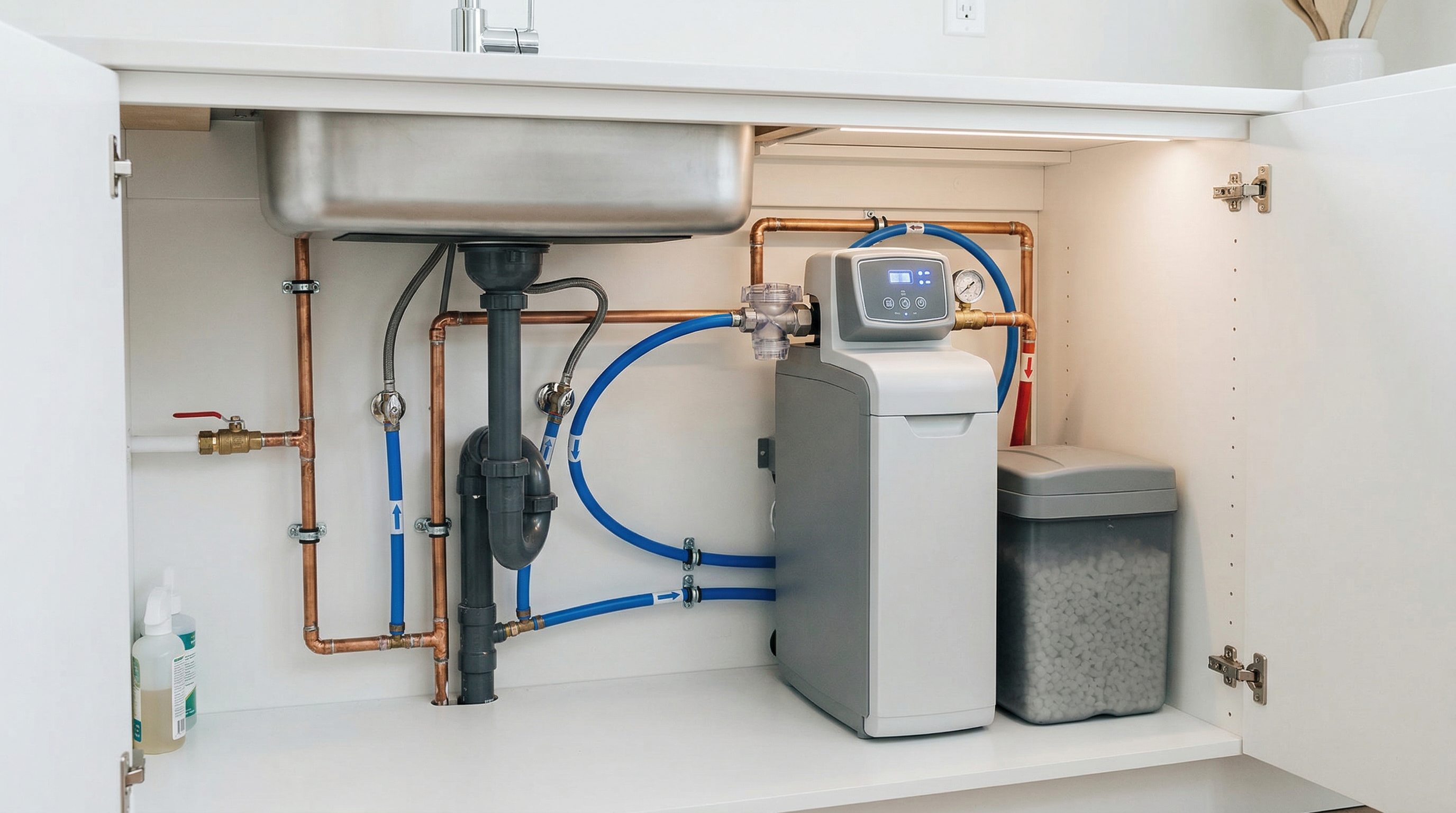
A salt-based ion exchange water softener is the most effective and widely used solution for residential hard water. The system works by passing water through a resin tank filled with negatively charged resin beads. Calcium and magnesium ions — positively charged — bind to the resin beads and are replaced with sodium ions, which do not cause hardness.
The result is water that:
- No longer forms scale in pipes, appliances, or on surfaces
- Creates a genuine lather with soap and shampoo
- Leaves skin and hair feeling noticeably softer after showering
- Extends the life of water-using appliances by 5–10 years
- Improves water heater efficiency by up to 15%
CrystalFlow Miami's Home Shield system ($1,559–$1,859 installed by a licensed plumber) features the Waterdrop G3P800 (10-stage UV, 800GPD) and/or G3P600 (8-stage, 600GPD), engineered specifically for South Florida water conditions. NSF certified, includes a 1-year warranty, and sized to handle Miami-Dade's typical hardness levels for single-family homes and larger condos.
For renters or households with limited installation space, the Kitchen Guard ($599–$719 installed) uses the Waterdrop G5P500A (8-stage alkaline RO, 500GPD) and/or T-3M (9-stage, 450GPD) — a practical first step that dramatically improves the water you drink and cook with.
For households that want to address both hardness and chemical contamination simultaneously, the Pure Life system ($2,279–$2,639) uses the Waterdrop X16 (11-stage alkaline+UV, 1600GPD) and/or X12 (10-11 stage, 1200GPD), removing hard water minerals along with over 1,000 contaminants, including PFAS, chloramine, TTHMs, and arsenic.
What to Expect from a Water Softener Installation in Miami
Professional installation from CrystalFlow Miami is completed by a licensed plumber and typically takes 2–4 hours for an under-sink system or a single-day installation for a whole-home system. The process includes:
- Free in-home water test to measure hardness (GPG) and confirm system sizing
- Equipment recommendation based on your home's size and water usage
- Professional installation with all plumbing connections and permits
- Post-installation testing to confirm the system is operating correctly
- Walk-through of maintenance requirements and warranty coverage
All CrystalFlow systems include a 1-year parts and labor warranty. Optional annual service plans (Silver at $199/yr, Gold at $299/yr, Platinum at $499/yr) cover filter replacements, salt delivery, and annual performance checks.
Stop Hard Water Before It Costs You More
Miami hard water is not going away — it is a function of the aquifer that supplies the city. But its effects on your home are entirely preventable. The scale on your faucets, the spots on your glassware, the reduced life expectancy of your appliances — all of these are solvable with the right water treatment system, professionally installed.
The longer hard water runs untreated through a Miami home, the more it costs in appliance replacements, plumbing repairs, and reduced energy efficiency. A water softener pays for itself in most Miami homes within 2–4 years when those ongoing costs are factored in.
Start with a free assessment of your home's water hardness.
Book a Free Water Test with CrystalFlow Miami. Our licensed team will measure your water's hardness level on-site, explain exactly what it means for your home, and walk you through the best solution for your budget.
Book a Free Water Test
Call (786) 947-3824 — No obligation. Results on-site.